Life Term Strategies

1. Huge Gains in Long Term
- Receive significant capital gains
- by investing in corporations
- (with wide economic moat & average peers’ net margin)
- In very very long term

2. Strong Periodic Cash Flow
- Maintain self-sufficient monthly cash flow
- Through dividend, gains on derivative & short term trading
- For re-investment to item # 1 mentioned above

3. Mind for Risk Management
- Ensure strong cash position
- Maintain low risk by continue monitor, analyze & feel:
economic trend & environment,
market condition & investors emotion
corporate performance & outlook
asset allocation & direction

4. Be a holy Christian investor:
- Invest in wisdom & varies ways, but consistent & not over nor under of what the Holy Bible expects a Jesus follower should be
- Keep regular & long term spiritual growth
Continue experience God @ finance market
Aim for life transform opportunities
- Even though it may not teach Billy & Bilibala what stocks to invest nor how to make more, more & more $

5.30.2009

Oil price analysis

上周六的投資講座, 有不少人問我三個問題:
  1. 大市點睇?
  2. 買什么投資最好?
  3. 油價會唔會好? 買油股好唔好?
http://www.blonnet.com/iw/2005/05/01/images/2005050100160601.jpg
Bilibala 在等侯第二季的經濟數據和業績. 現在第二季未完, 雖然消費者信心指數重返50以上, 但屋價同銷售不算太好, 失業依然高企, 加上 S&P 500由低位升了 38%, 重返合理的衰退水平. 所以, 非常大機會在未來 3 個月玩上落市. 要入市就不用太心急, 跌 10%入, 又或者月供也可以.
( 3月4月要急入, all in 也可以, 但現在你見人賺錢才追貨就只有抱長線 buy & hold, 總之不用太心急).

買什么投資最好通常取決於個人喜好同立場. 好難一概而論.

加拿大股市沒有什么多元化的行業, 只有金融, 能源和礦產類. 所以, 許多人才問我買油股好唔好? 要了解油價, 先參考 Bilibala 上年的一個分享 - 加油! 由得我. 加價? 油不得我
http://images.huffingtonpost.com/2009-02-20-oil.pump.5001.jpg
何解 Bilibala 在去年 7月就認為油價會直插但會再升至 US$100?
直 插跌破 US$40, 單是美金升 25%, 就足以令油價跌20-30%, oil demand 預測由 +2%跌到 -1%又會再跌多 20-30%, 再加上之前上升的炒作, 現在 US$65 油價其實合理(略為偏低). 再計上下跌炒作和悲觀的oil demand 預測, 所以之前跌破 US$40.

現在美金下跌, 相信會再跌多一點, 假如經濟開始復蘇, oil demand 回升至 +1%, 而 oil supply 不上升, 再加未來的通脹壓力, 即使沒有上升的炒作, 兩年內升上 US$100其實是個非常保守的估計.
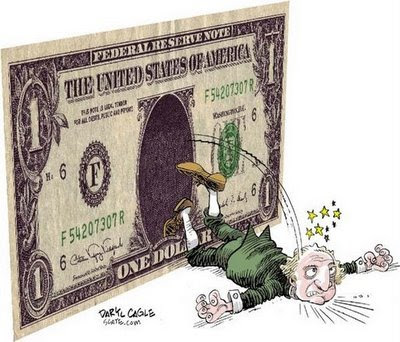
https://blogger.googleusercontent.com/img/b/R29vZ2xl/AVvXsEgIYqlwjMbu1AhOd_o4Qb03UC9E8e_ITcx2QeO3u6Lt-Tk8by9DKgaGEyPhxPzfwiyuWJgtPaLLSlRs4tw3M47MOO4Bpjv2vroA1_J_VaUa9_Me_C223WEFcOOtas9kOI6L-y6j0FWYr8g/s400/usd+cartoon.jpg
但即使成功預測油價, 也不代表買油股會有高回報.

首先要明白在新聞每日報告的國際原油價格主要有兩個: 一個是美國 WTI 的 light sweet crude, 另一個是英國的 North Sea Brent Crude.
Light sweet crude是開採成本最低的原油. 在沙地, 開採成本只需要 US$1-2, 其他地方開採提煉成本由 US$8-20不等.

加拿大是全球石油藏量第二高的國家, 也是美國第一石油進口國, 但加拿大石油主要是油砂. 油砂的 Sulfur和酸度比 light sweet crude 和 North Sea Brent Crude高得多, 開採提煉成本要 US$45-55.
http://blog.foreignpolicy.com/files/images/oilsand.jpg
這就解釋到為何加拿大油公司在去年油價下插時, 股價跌 6-8成, 而美國只跌 3-5成的原因. 因為加拿大油公司要承受的油價波動風險遠比美國的高.
也解釋到在 3-4月轉勢時, 為何加拿大油公司反彈較強勁的原因.
就公司業績而言, 加拿大油公司以目前的油價, 只能 breakeven, 或賺少少, 但美國油公司會賺多點.

另外, 油公司分上遊(鑽探/開採), 下遊(提煉/運輸/零售/化工)和設備提供三大類.
油價上升會受惠上遊公司, 而對下遊公司帶來不利因素.
至於設備提供, 通常要看整個石油行業長期發展.
http://wpcontent.answers.com/wikipedia/commons/thumb/6/6c/Esso_Kanata.jpg/350px-Esso_Kanata.jpg
當然, 每間油公司石油蘊藏量, 當中分佈, Sulfur和酸度的評級, 管理層, 現金流/負債率, 品牌價值等等.

http://www.midwestagro.ca/Quickstart/ImageLib/Imperial_Oil_logo.gif
所以, 計算油公司價值是遠比油價複雜和難於計算.
Bilibala 認為因為加拿大油公司升了不少, 未來會升上 US$100, 但要等經濟確認復蘇才會開始實現. 美國油公司回報應該較好, 風險亦會較低.
保守一點, Bilibala 只會買全方位(有上遊又有下遊)的油公司, 既然不清楚短期升跌, 所有會揀提煉業務多一點而不單單只有油砂資產的公司. 這樣, 不管油升油跌, 公司都會為我這樣的小股東賺取盈利. 我亦可以安心持有.
http://www.philatron.com/NewCatalog/TAB10/Oil%20Refinery.jpg
跟據上述的簡單分析, 加拿大油公司之中, Petro Canada, Imperial Oil, Husky Oil 同 Encana 會比 Suncor, Talisman 同 Oil Sand 穩陣得多.

Petro Canada 最好, 最 diversify, cash又多, 但有「不被收購」的 28%下跌風險, 而 Husky Oil 屬於超人(一個超級成功但不照顧小股東的勁人), Encana, Bilibala 讀不明它的煉油業又有分拆風險. 所以, Bilibala 在沽出 Petro Canada 賺了 42%之後轉入而且不斷入 Imperial Oil, 但由於是Exxon Mobil的子公司, 所以管理好, 但未來增長會局限在加拿大.
http://tehomegha.com/content/stuff/astuff/5.JPG
美國幾間大的, Exxon Mobil, Chevron Corp 同 Conoco Phillips 都好. Conoco Phillips就提煉業務比重最高, 股價最平. Exxon Mobil管理各方面都好, 就是貴一點.

中國石油公司三間都有壟斷優勢, 但同時有較重的政治風險. 既然有美加選擇, 投資中國的石油公司 opportunity cost 就太高, 所以在現階段, Bilibala 沒有買.

5.29.2009

Econ data 09 week 22

Overall
  • US 1Q GDP revised from -6.1% to -5.7%, still worse than expect -5.5%
Consumer market
  • US May consumer confidence up to 54.9 from 40.8 in Apr, better 42.6.
  • US Apr Durable goods order up +1.9% from -2.1% in Mar, better +0.5%
  • US May Chicago PMI down to 34.9 from 40.1 in Apr, worse 42.0
  • Good to see the consumer confidence once again rise back above 50, June results should look good too but more trend analysis to be done in order to confirm whether the recover is starting or not
House market
  • US Apr new home sales flat at 352k from 351k in Mar, worse 360k
  • US Apr existing home sales up to 4.68M from 4.55M, same 4.66M
  • US Mar S&P home price index vs py down -18.7% from -18.67% in Feb, worse -18.4%
  • Further confirmed the house market "free fall" has significantly slow down and finally stablized
Job market
  • US 05/23 initial jobless claim down to 623k from 636k, better 628k

5.26.2009

China Life may sell China Cons Bank

中國人壽保險(集團)公司(China Life Insurance (Group) Co., 簡稱﹕國壽集團)董事長楊超週一表示﹐國壽集團可能考慮出售所持中國建設銀行股份有限公司(China Construction Bank Co., 0939.HK, 簡稱﹕建設銀行)的股份﹐前提是公司能夠從股份減持交易中獲利。本月較早時候﹐國壽集團及旗下兩家子公司從美國銀行(Bank of America Corp.)手中購入27.7億股建設銀行股份。楊超在北京出席股東會議的間隙向記者表示﹐只要減持上述股份對國壽集團有利﹐公司會考慮出售這些股份。他表示﹐國壽集團最近購入建設銀行股票屬於一項財務投資。他還補充道﹐上述股份不存在禁售期。楊超同時兼任上市公司中國人壽保險股份有限公司(China Life Insurance Co. LFC, 簡稱﹕中國人壽)董事長一職。
Bilibala's comments:
Should have no impact in terms of my fair value calculation.

5.22.2009

News - Google music for free

Monday Google launched in China Genuine music download service free of charge. As a result, Google rival Baidu in China at the Nasdaq stock market Monday in regular trading down 5.55 percent.

“Wall Street Journal” reported Monday that Google, including Warner, Universal, EMI, Sony’s four major record companies, including more than 140 record labels to reach nearly 1.1 million licensed songs, the user can music through Google search and download.

Google will search the music section at some embedded ads which will be part of the advertisement fee to be returned to the form of royalties to record companies in order to reach users can download free music and record companies and musicians can also profit.

“Wall Street Journal” emphasis, Google and its partners, “hoped that the new service will be able to Google’s competitors in China, especially to attract users from Baidu.” Baidu is still firmly in the rule of the Chinese search market. Google will be near half of the advertising revenue paid to the record companies, while the other half will be paid to the service Google partner in China Whale Music Net. Google through the introduction of genuine music search service for more traffic.

Standard & Poor’s analyst (Scott Kessler) investors at Monday report that Google’s music service will help Google to get more Chinese in China’s market share. He went on to reaffirm Baidu shares The “sell” (Baidu) rating, as well as Google shares “strong buy” (Strong Buy) rating.
Affected by this, Baidu stock market Monday on the Nasdaq in regular trading to close at 172.99 U.S. dollars, down 10.16 U.S. dollars than the previous, a decrease of 5.55%. In after-hours trading, Baidu shares fell 0.48 U.S. dollars, a decrease of 0.28 percent, to close at 172.51 U.S. dollars. In the past 52 weeks, the lowest price for Baidu 100.50 U.S. dollars, up to 382.90 U.S. dollars.

Bilibala Comments:
Today, lots companies and ethical organization defense on copy right. Those companies loss a lot of money, so they sue.

What they should do is how to decide perform they can generate huge amount of profit while the customers can enjoy the products & services for free or at very low cost.

Those who fail to do this and only can sue will sooner or later being kick out of the game. It has nothing to do with copy right. Only those who gave up their copy right will win the battle in the today and in future economic market.

My point is: free download should not be illegal!! And more importantly, it will soon be legal. That is the mega trend.

Econ Data 09 week 21

This week is another week with light data. The equity market fall a bit after the huge rally, but I think it is fairly reasonable. GM US may plan to file bankruptcy C11 next week, also GM Canada Union has entered into agreeement to cut salary and benefit. Those should clear some of the investors uncertainty.

Consumer market
  • US Apr lending indicators up +1.0% from down -0.3% in Mar (better than expect, +0.8%)
  • As USA & Canada tax players receive their tax refunds, the May figures which will start publishing in Jun should looks better (even though it may not be treated as a trend indicator)
House market
  • US Apr building premits down to 494k from 511k in Mar (worse, 530k)
  • US Apr housing starts down to 458k from 525k in Mar (worse, 520k)
Job market
  • US 09/05/16 initial jobless claims down to 631k from 643k last week (worse, 625k)

News - Android 'a revolution'

Among all the companies fighting to grab a piece of the brightest star in computing--the smartphone--Google seems the least interested in taking the spoils.

Android, Google's mobile operating system, doesn't generate revenue for the company, and likely never will--at least in the direct sense. But Andy Rubin, Google's director of mobile platforms, thinks Google and the world will benefit from any device created with the intent of getting more people onto the Internet, and isn't shy about explaining why the open-source approach chosen for Android holds the most promise of reaching that goal.

Android made its debut in 2007, a few months after another computer with designs on improving the Internet experience on a phone--the iPhone--hit the streets as perhaps the most hyped gadget ever. Buzz has been slower to build around Android, but that could start to change as additional phones arrive that have a bit more pizazz than the G1, the world's first Android phone released last October.

Ahead of next week's Google I/O Developer Conference, where Rubin is expected to discuss future Android phones and goals for the software, he sat down with CNET News to review Google's progress thus far and share his impressions of what makes Android unique.

Q: How do you reconcile the goals of staying open with the need to offer carriers their own experience and the compatibility problems that may come as a part of that?
Rubin: Traditionally what's happened is the burden has been on the (phone makers) to be systems integrators. And what you get is kind of a lowest common denominator of functionality and usability because the software was actually developed by multiple parties, and nobody was really thinking holistically about the user experience.

It's (about) how do people expect these products to perform, and what are the various paces that a consumer will put these products through? No one company was thinking about that.
And so a huge benefit to this open platform is that it's complete, it's basically everything you need to build a phone. Sometimes the reason things fragment is because the platform is incomplete and people need to fill in the pieces. And when you fill in the pieces, you inherently have incompatibility.

It is possible to have a completely different user interface with a completely different look and feel but still be compatible. And that will be demonstrated.

There will be a couple of launches; we've generated a lot of interest in China. The use cases in China are slightly different in the U.S.; typically in China, because of the Asian input, people prefer a pen-based interface rather than a capacitive-touch based interface because they expect a stylus to be able to draw the complex characters. So the use case has completely changed but we have achieved compatibility.

How did the goal of Android evolve after it was brought into Google?
Rubin: The goal was pretty much the same, the business model obviously changed. Google's business model is deep into advertising, and so for Google this is purely a scale of the business, we just want to reach more people, and hopefully they'll use Google and we'll get the upside of the advertising revenue.

By the way, we're confident enough in our advertising business and our ability to help people find information that we don't somehow demand they use Google. If somebody wants to use Android to build a Yahoo phone, great.

Did you ever consider doing a phone? A Google phone?
Rubin: Yeah...I mean, it's funny, if you build one phone...I'd much rather be the guy that does a platform that's capable of running on multiple companies' phones than just focusing on a single product.

A single product is going to have, eventually, limitations. Even if that was two products that's going to have limitations. But if it's a hundred products, now we're getting somewhere, to the scale at which Google thinks people want to access information.

Getting back to business models, Google has a great business model around advertising, and there's a natural connection between open source and the advertising business model. Open source is basically a distribution strategy, it's completely eliminating the barrier to entry for adoption.

When Android was a start-up company, it was always a razor/razor blade business. The razor, the free thing, was the open-source operating system. In Android's original business model, the blades were basically provisioning systems that we sold to wireless carriers that had hooks into the open-source operating system. That was an unproven business model, I would say, and certainly the feedback I got when we were going for venture financing was that it was an unproven business model.

I was willing to give it a go, but then Larry and Sergey and Eric came along and said, "it's much more aligned with Google's core business and Google's business model, and you'll have a much easier time executing within Google." And retroactively, I agree.

Is this a market share play? Is this something where you want to conquer the mobile world?
Rubin: We look at it first from the scale perspective. The mission here is to organize the world's information and make it universally accessible and relevant. So the accessible part: think of a world in which you are somehow prevented from accessing the information you want. When I go to a hotel room and pay the $19.95 to get on the Internet and they have some firewall that doesn't let me get to my Exchange server, it makes me berserk.

Google doesn't sell Android, but hopes to encourage mobile Internet use to drive Web searches--and ads.(Credit: Stephen Shankland/CNET)

I look at things--and Google looks at things--in (terms of) how could the landscape change in such a way that consumers who want to access Google services can't?

In that honest goal of not having consumers being blocked and allowing them to access information, it helps our competitors as well. What we don't want to do is disadvantage anybody by being the only person; we don't want to create any kind of separate structure where people can only access Google. And this is the definition of openness: it's not just open source, it's the freedom to get the information that you're actually looking for.

Why is this approach better what Apple or Palm is doing where they control the whole device?
Rubin: Controlling the whole device is great, (but) we're talking about 4 billion handsets. When you control the whole device the ability to innovate rapidly is pretty limited when it's coming from a single vendor.

You can have spurts of innovation. You can nail the enterprise, nail certain interface techniques, or you can nail the Web-in-the-handset business, but you can't do everything. You're always going to be in some niche.

What we're talking about is getting out of a niche and giving people access to the Internet in the way they expect the Internet to be accessed. I don't want to create some derivative of the Internet, I don't want to just take a slice of the Internet, I don't want to be in the corner somewhere with some dumbed-down version of the Internet, I want to be on the Internet.

Even if that comes at the cost of compatibility or UI advances? If you're going to be the Everyman phone, you're going to have to make some sacrifices at some point, right?
Rubin: I think that's yet to be seen. I think we've done a pretty good job. Again, we're talking about a clean slate technology that didn't exist a few years ago. So I'm actually thinking this could be a revolution.

Remember people used to trumpet "write once, run everywhere"? Well, I think we're actually there. I think when we start talking about the possibility of exploring things like Netbooks and car navigation systems, you have potentially different processor architecture types. You have Intel, you have ARM, set-top boxes have MIPS.

We have all sorts of different processor architectures, and the guys who are steeped in legacy have trouble addressing those markets with a single solution. I actually think Android is the potential single solution that can address all those markets, and it's new, it's revolutionary. It will change the game.

If this is a revolution, why haven't we seen more of these phones?
Rubin: It takes about 18 months to build a phone from end to end. What we wanted to do for our market entry was make sure that we had one successful showcase product to prove that the product was reliable and robust and ready to go. We chose HTC as our partner for that.

The forthcoming Samsung i7500, based on Google's Android(Credit: Samsung)
At the moment we open-sourced, November 7 (2007), that's when a lot of these guys got their hands on it. We're still in that 18-month window of building products, and what you'll see coming up is a whole string of products.

What did you learn from Android 1.0 to 1.5?
Rubin: I learned that 1.5 was the product I wished was 1.0. The reason is it's a different business for Google: helping the industry build operating systems for their cell phones.

Because on the Web, you can iterate very quickly, and you can put things out in beta, you can fix bugs literally hourly. On cell phones you're blasting something in a ROM in a device that's in manufacturing where you did just-in-time ordering of all the parts and have inventory risk and everything else. Widgets are literally coming down a factory line, and if software isn't ready by the time they reach the end of the line they're going to drop on the floor and pile up. And that winds up costing a lot of people a lot of money. And if you don't get it right, you're kind of hosed.

What is going to dictate who wins and loses in this market? We all have different things that we may want in a phone. How do you try to be the Everyman phone and try to keep up with what's going on?
Rubin: We're trying to be something really unique, and I don't think anybody else is offering this. We put a very focused spotlight on openness, and openness is the means by which you get the product that you want.

Do people care (about openness)? I mean, the industry might care, the partners in the Open Handset Alliance may care, but do consumers?
It's an enabler. I'm not on some marketing campaign to educate consumers about what openness means. Actually, if you ask anybody on the street, you're going to get 10 different definitions of openness. The Symbian guys are going to be like "I'm open," and the LiMo guys are going to say "I'm open."

There's probably like a royal flush of openness, where you can lay your cards on the table and say (pointing) "open, open, open, open, open," it's the guy with the most open that's going to win.

I think we're that. I think that we have an open ecosystem, we have an open-source platform, we chose the right license, there are no viral aspects, it's absolutely 100 percent free, it's complete, it's everything you need to build a phone. When you add all that stuff up, all those ingredients, potentially--I think the jury's still out--we can make a really successful product.

5.20.2009

Finance 101 - Credit Card

Don't jump at that credit card offer
You might be surprised to find lower credit limits and higher interest rates and fees.
By Gerri Willis, CNN personal finance editor
May 20, 2009: 12:39 PM ET

NEW YORK (CNNMoney.com) -- President Obama has called on Congress to pass credit card reform by Memorial Day. The bill, expected to pass shortly, will make it harder for credit card companies to hike rates and fees starting early next year. But that bill doesn't guarantee that a new card offer is in your best interest. Here are some things to look at when deciding to open a new credit card account.

We all know the term APR (annual percentage rate) but the number consumers should really be paying attention to is "effective APR."

According to Greg McBride, senior financial analyst at bankrate.com, explains, "An effective APR represents your total cost of credit. Now, keep in mind, this may be more than just the interest rate. If you're paying an annual fee, if you incurred a balance transfer fee when transferring the balance to that card ... those are costs that will add to the interest rate that you're effectively paying, effectively raising the cost that you pay on that balance."

Your "effective APR" is unique, different from everybody else's. Here's an example of how to calculate your "effective APR" from Bill Hardekopf at lowcards.com.

Our hypothetical guy -- let's call him Tony -- applied for a credit card with 0% APR for one year.
He spent $1,000 on the card and decided to make only the minimum payments for that first year.

Later, he took out a $2,000 cash advance -- not realizing there was a cash advance fee -- and that cash advances are at a much higher rate than purchases.

Then Tony missed a couple payments, which triggered two late fee charges. It also triggered a default rate -- and his card rate was raised to 29.9%. He eventually paid off the entire card and closed the account. So Tony was tempted by the 0% introductory offer, but it cost him dearly.

Let's add up the total costs to the card:
  • $75 interest on purchases
  • $379 interest on cash advances
  • $60 cash advance fee
  • $78 late charge fee

So he spends $592 on all these extra costs, which makes his "effective APR" 19.7% on a card that was supposed to be 0% APR. Be aware of:

  • Introductory rates
  • Payment schedules
  • Cash advance fees
  • Late fees
  • Default rates

You really have to sit down and crunch the numbers to determine what is the best card for you. Remember, some of these expenses are easily managed. Make your payments on time, keep an eye on your rate schedule and avoid cash advances whenever possible.

Bilibala's comments:

As a credit card holders, if you settle all the balance (not just min. payment) every month on time, with a credit card that do not charge annual fees, I think no one can take any advantage from you and I like cash rebate as the reward program.

The information provided in the entire blog is not intended to provide legal, accounting, tax or specific investment advice. The information presented was obtained from sources believed to be reliable; however, I cannot represent that it is accurate or complete. I assume no responsibility for any losses, whether direct, special or consequential, that arise out of the use of this information. This information is subject to change without notice. Stock performance are not guaranteed, their prices change frequently and past performance may not be repeated. Please do your own investigation, or contact your own professional advise, before investing.